
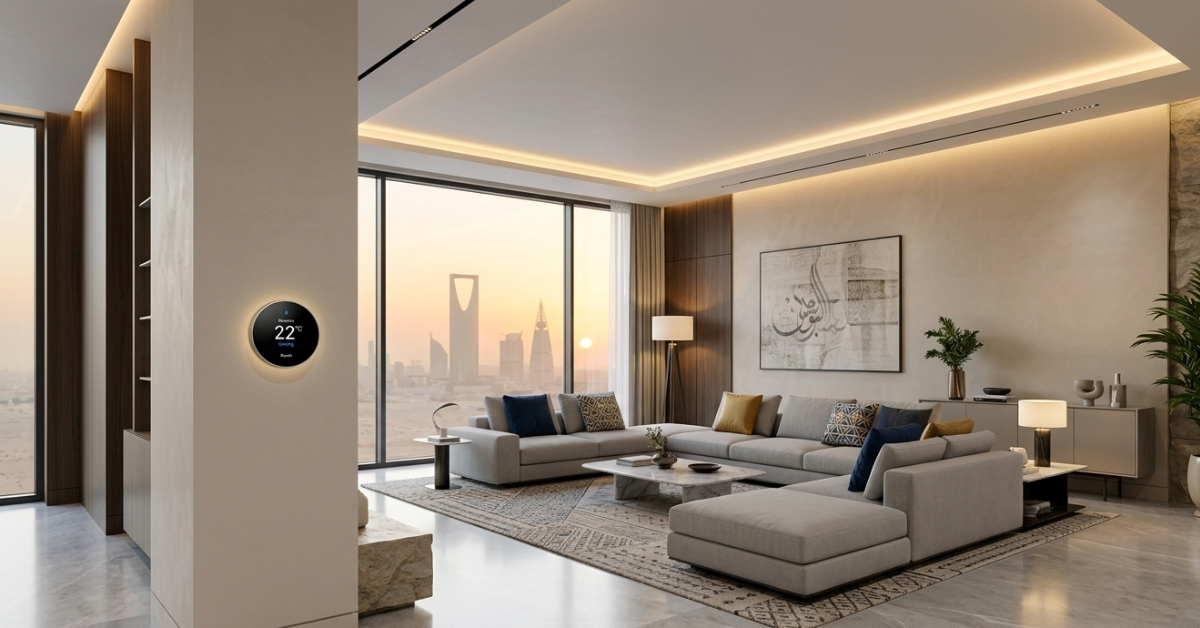
Living and working in Saudi Arabia means dealing with some of the most unforgiving summer temperatures on the planet, often soaring past 50°C. In this intense desert climate, air conditioning isn’t a luxury it’s a critical component of daily survival, health, and operational continuity. However, traditional cooling systems often struggle under this immense, non-stop thermal load, resulting in soaring electricity bills and frequent mechanical breakdowns. This is where smart HVAC technology steps in, revolutionizing how we cool our spaces.
By merging heavy-duty cooling machinery with internet-of-things (IoT) intelligence, a smart HVAC setup shifts climate control from a reactive, manual chore into a predictive, automated system. Instead of blasting air continuously at a single temperature, these modern networks dynamically adapt to external weather conditions, indoor occupancy, and real-time energy pricing.
Whether you are managing a busy household in Riyadh or overseeing a high-rise corporate facility in the Eastern Province, upgrading to intelligent climate infrastructure is the ultimate way to secure reliable comfort without draining your financial resources.
Intelligent Comfort for Saudi Households
For Saudi families, coming home to a perfectly cooled living room shouldn’t mean leaving the AC blasting at maximum capacity all day while the house is empty. Implementing a smart HVAC system allows homeowners to customize their cooling schedules down to the minute through intuitive smartphone applications.
These connected systems utilize machine learning to adapt to your daily routines, meaning your smart HVAC will automatically throttle down when you leave for the day and gradually lower the temperature just before you return.
| Feature | Traditional AC | Smart HVAC Solution |
| Control Interface | Manual remote control | Smartphone app & Voice control |
| Operation Mode | Fixed on/off cycles | Variable speed adjustments |
| Scheduling | Basic timers only | Learning-based automation |
| Energy Tracking | Monthly bill surprises | Real-time consumption analytics |
Furthermore, the integration of smart sensors eliminates the common household problem of “hot spots” rooms that stay warm due to sun exposure while other areas feel freezing. By continuously reading localized ambient temperatures and adjusting variable-speed compressors accordingly, modern homes can enjoy perfectly balanced, crisp air in every room simultaneously.
Transforming Corporate Workspaces and Offices
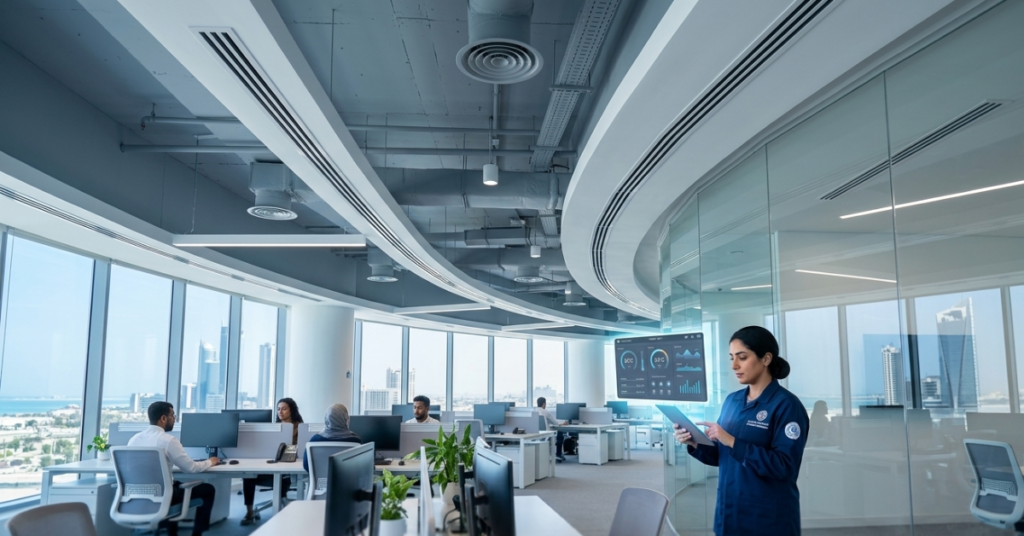
The advantages of intelligent automation extend far beyond residential comfort; the corporate sector stands to gain even more. Managing a commercial workspace in cities like Riyadh or Dammam requires balancing complex thermal zones, heat-generating electronics, and constantly shifting occupancy levels. A centralized smart HVAC infrastructure gives facility managers absolute control over their entire building’s climate from a single, cloud-based dashboard.
Instead of relying on employees to manually adjust individual thermostats, a commercial smart HVAC deployment utilizes occupancy sensors and variable air volume (VAV) systems to direct cooling precisely where it’s needed. When a conference room empties out, the system automatically dials back the airflow, preventing unnecessary energy waste. For businesses looking to optimize operational workflows, this level of microscopic control keeps workforce productivity high while slashing overhead costs.
Fueling Energy Efficiency and Saudi Vision 2030
Energy expenditure is a major operational concern across the Kingdom, with climate control accounting for more than 60% of a building’s total utility overhead. This level of operational efficiency directly aligns with Saudi Vision 2030, which places a massive emphasis on national energy sustainability and reducing carbon footprints. Upgrading to a smart HVAC solution helps properties comply with the increasingly strict regulations set by the Saudi Energy Efficiency Center (SEEC).
Modern sustainability isn’t just about using less power; it’s about using power intelligently when and where it matters most.
Financially, the impact of this optimization is felt almost immediately. Switching to a fully optimized smart HVAC network can slash monthly electricity bills by up to 25% to 30%. By running on inverter-driven compressors that ramp up or down smoothly rather than turning on and off abruptly, these systems reduce massive power spikes, translating directly into measurable corporate savings and a much faster return on your investment.
Combating Dust and Elevating Indoor Air Quality
Another major environmental challenge in the Kingdom is managing indoor air quality (IAQ) during seasonal dust storms. Traditional AC units often pull in external particles or simply recirculate stale air, leading to an increase in allergens and airborne pollutants. A modern smart HVAC system addresses this by integrating automated ventilation systems and real-time air quality monitors.
When outdoor dust levels spike, the smart HVAC controls can automatically adjust the outdoor air intake dampers and activate advanced multi-stage filtration to protect occupants from respiratory strain.
The Importance of Professional Installation and Maintenance
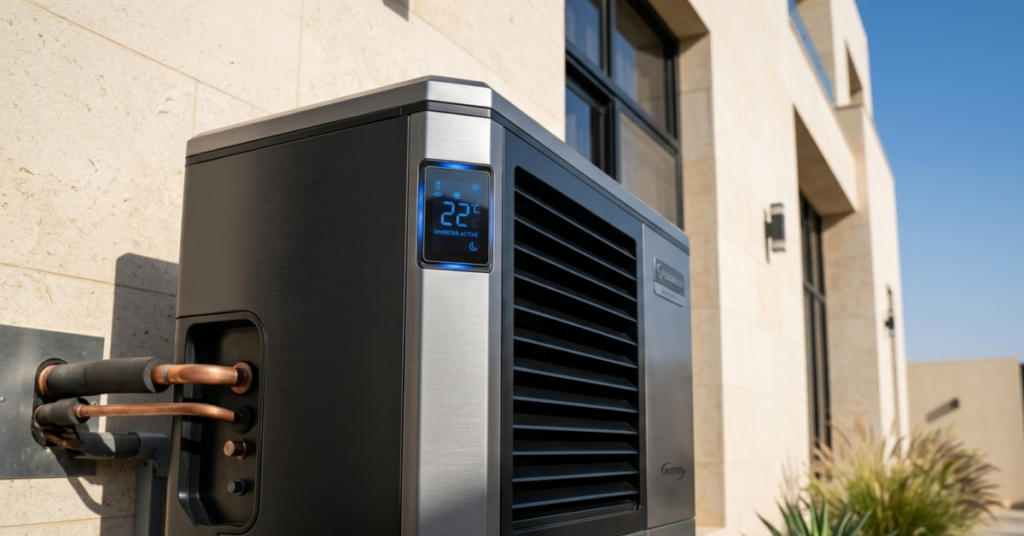
Achieving this level of precision requires more than just buying high-tech hardware; the execution matters immensely. Working with a certified professional ensures your smart HVAC installation is perfectly calibrated for the local climate and integrated with your building’s existing ductwork and electrical infrastructure.
Regular diagnostics, sensor calibrations, and automated over-the-air firmware updates keep the intelligence layer sharp, preventing software glitches from disrupting your physical comfort. Ultimately, investing in a modern smart HVAC system is the single most effective way to future-proof your property against rising utility rates and extreme weather, keeping Saudi homes and offices safely insulated from the desert heat.